Safe Ways to Clear Clogged Drains
Chemical drain cleaners like Drano and Liquid-Plumr may seem convenient, but they can damage your pipes, harm the environment, and pose safety risks. Here are professional-approved methods to clear minor clogs safely.
Why Avoid Chemical Drain Cleaners?
**Pipe Damage:** The caustic chemicals generate heat that can warp PVC pipes and corrode older metal pipes, especially with repeated use.
**Incomplete Clearing:** Chemicals often only partially dissolve clogs, leaving residue that catches more debris.
**Safety Hazards:** Chemical burns, toxic fumes, and dangerous reactions if mixed with other products.
**Environmental Impact:** These chemicals eventually reach water treatment facilities and waterways.
Method 1: Boiling Water
**Best for:** Soap and grease buildup in kitchen and bathroom sinks.
**Steps:** 1. Boil a full kettle or pot of water 2. Pour directly down the drain in 2-3 stages 3. Wait a few seconds between pours 4. Repeat if needed
**Caution:** Don't use boiling water on PVC pipes under high pressure or if you've recently used chemical cleaners.
Method 2: Baking Soda and Vinegar
**Best for:** Moderate clogs and odor removal.
**Steps:** 1. Remove visible debris from drain 2. Pour 1/2 cup baking soda down the drain 3. Follow with 1/2 cup white vinegar 4. Cover the drain immediately 5. Wait 15-30 minutes 6. Flush with hot water
The fizzing reaction helps break up organic material and freshens drains.
Method 3: Plunger Technique
**Best for:** Solid blockages in toilets and sinks.
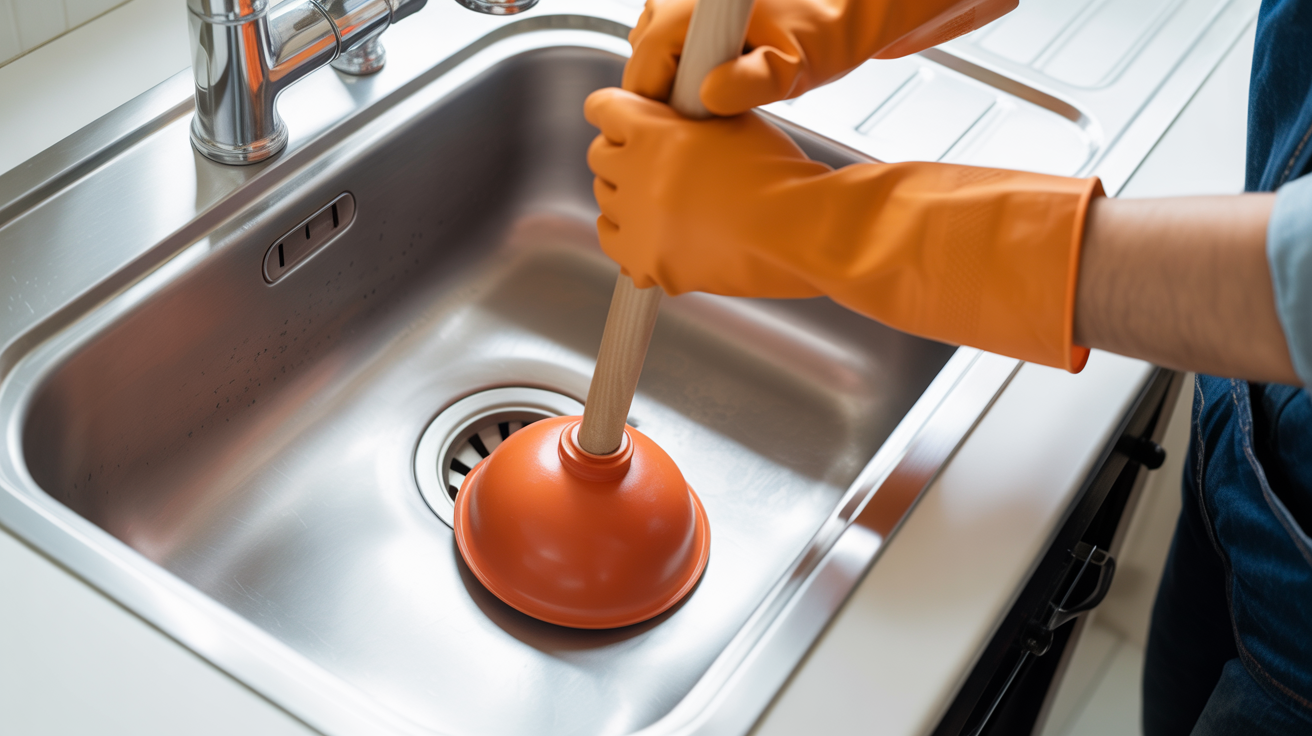
**For sinks:** 1. Fill sink with 2-3 inches of water 2. Block overflow hole with wet rag 3. Place cup plunger over drain 4. Pump vigorously 15-20 times 5. Check if water drains
**For toilets:** 1. Use a flange plunger (has extended rubber flap) 2. Ensure plunger is submerged in water 3. Create seal and pump forcefully 4. Repeat several times if needed
Method 4: Wire Hanger Snake
**Best for:** Hair clogs near the drain opening.
**Steps:** 1. Straighten a wire hanger, keeping small hook at end 2. Remove drain cover 3. Insert hook end into drain 4. Fish around to catch hair and debris 5. Pull out slowly, removing accumulated gunk 6. Flush with hot water
Method 5: Wet/Dry Vacuum
**Best for:** Stubborn clogs when you have a shop vacuum.
**Steps:** 1. Set vacuum to "liquids" mode 2. Create tight seal over drain 3. Turn to highest suction setting 4. The vacuum can pull clogs out effectively
Method 6: Enzyme Drain Cleaners
**Best for:** Maintenance and slow drains (not complete blockages).
Enzyme-based cleaners use natural bacteria to eat organic matter. They're: - Safe for all pipe types - Environmentally friendly - Effective for maintenance - Best used overnight monthly
Preventing Future Clogs
**Kitchen Sinks:** - Never pour grease down drains - Use sink strainers - Run hot water after each use - Monthly baking soda treatment
**Bathroom Drains:** - Use hair catchers - Clean stoppers weekly - Avoid flushing "flushable" wipes - Monthly enzyme treatment
When to Call a Professional
DIY methods work for minor clogs, but call Hester Plumbing when: - Multiple drains clog simultaneously - Clogs return repeatedly - You hear gurgling in other drains - Water backs up in unexpected places - Bad odors persist after clearing
These signs indicate deeper issues requiring professional equipment like motorized augers or hydro-jetting.
Professional Drain Cleaning Services
Hester Plumbing uses professional-grade equipment that clears clogs completely without damaging pipes: - **Motorized drain snakes** for stubborn blockages - **Hydro-jetting** for complete pipe cleaning - **Camera inspection** to identify root causes
Schedule drain cleaning: (903) 326-3358
Tags: